Door Supervisor vs Security Guard
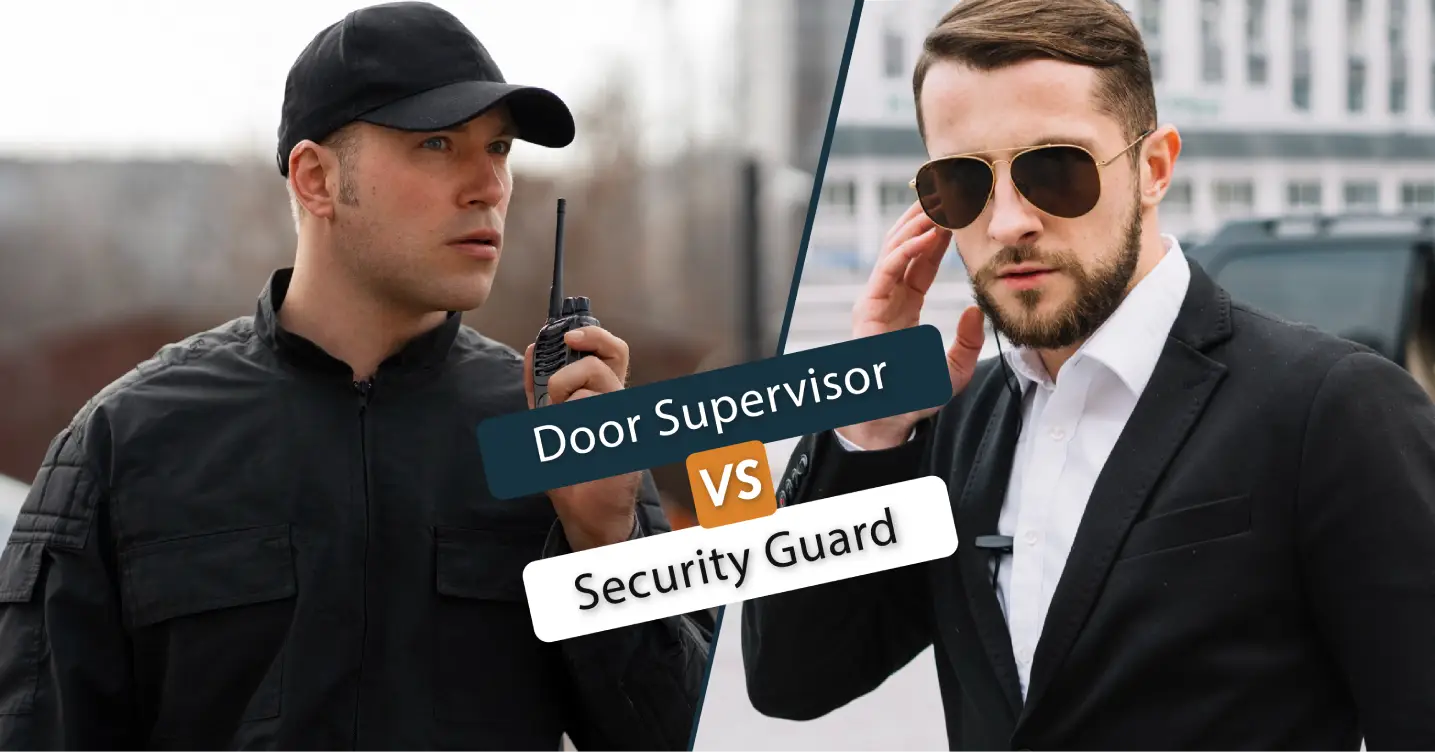
Door supervisor vs security guard licence is the first decision anyone entering the industry makes, and it is worth getting right before paying for a course. The Door Supervisor licence covers everything the Security Guard licence covers plus licensed premises; the Security Guard course is two days shorter. This guide compares the two licences, the work each allows and what each costs.
When it comes to security roles in the UK, the terms “door supervisor” and “security guard” are often used interchangeably. However, they encompass distinct responsibilities, training, and legal powers. Understanding these differences is crucial, particularly for those pursuing a career in the security industry or businesses seeking appropriate security measures. In this article, we will delve into the key differences between Door Supervisor vs Security Guard Licence, highlighting their unique roles and the importance of each within the realm of security services. The Door Supervisor vs Security Guard Licence comparison is essential for making informed decisions about your security career.
Roles and Responsibilities
Door Supervisor
A door supervisor, often seen at licenced premises like pubs, clubs, and event venues, is responsible for ensuring the safety and security of both the premises and its patrons. Their duties include:
- Access Control: Managing the entry and exit points, checking IDs, and ensuring only authorized individuals gain access.
- Conflict Resolution: Handling disputes, preventing and managing aggressive behavior, and ensuring a safe environment.
- Crowd Management: Controlling the flow of people, preventing overcrowding, and maintaining order.
- Compliance: Ensuring the venue adheres to licencing laws, health and safety regulations, and fire safety protocols.
Security Guard
Security guards, on the other hand, can be employed in a variety of settings including retail stores, office buildings, residential complexes, and construction sites. Their primary responsibilities are:
- Surveillance: Monitoring CCTV cameras, conducting regular patrols, and observing suspicious activities.
- Asset Protection: Protecting property from theft, vandalism, and other criminal activities.
- Access Control: Similar to door supervisors, security guards manage the entry and exit of people, but typically in a broader range of environments.
- Incident Response: Responding to alarms, emergencies, and incidents, providing assistance and reporting to the relevant authorities.
Training and Qualifications
Door Supervisor Training
To become a door supervisor, individuals must complete the SIA (Security Industry Authority) Door Supervisor course. This comprehensive training includes:
- Working within the Private Security Industry: Understanding the roles, responsibilities, and the legal framework.
- Working as a Door Supervisor: Conflict management, physical intervention skills, and customer care.
- Conflict Management: Techniques to de-escalate situations, manage aggressive behavior, and ensure safety.
- Physical Intervention: Training in restraint techniques and safe physical intervention.
Security Guard Training
Security guards must also obtain an SIA licence, but the training differs slightly. The SIA Security Guard course focuses on:
- Common Security Industry Knowledge: Roles and responsibilities within the security industry.
- Security Guarding Duties: Patrolling, access control, and incident response.
- Communication and Reporting: Effective communication, reporting incidents, and maintaining logs.
- Conflict Management: Basic techniques for managing conflicts and ensuring safety.
Legal Powers and Authority
Door Supervisor
Door supervisors have the authority to conduct searches of individuals entering a licenced premises, provided they have the person’s consent. They can refuse entry to individuals who do not comply with the venue’s policies or show aggressive behavior. They also have the power to use reasonable force if necessary to maintain safety and order.
Security Guard
Security guards do not have the same authority to conduct searches unless it is part of the employment contract or with the individual’s consent. Their powers are generally limited to observing and reporting suspicious activities, deterring criminal behavior, and contacting law enforcement when necessary. They can perform citizen’s arrests under certain conditions but must adhere to strict legal guidelines.
Employment Opportunities
Door Supervisor
Door supervisors are typically employed in nightlife venues, music festivals, sports events, and any place where large crowds gather. The job requires strong interpersonal skills, the ability to remain calm under pressure, and a good understanding of the legal requirements related to licenced premises.
Security Guard
Security guards have a broader range of employment opportunities. They can work in retail security, corporate security, residential security, and industrial security, among others. The role requires vigilance, attention to detail, and the ability to handle various security situations effectively.
Conclusion
While door supervisors and security guards share some similarities, their roles, training, and legal powers set them apart. Door supervisors are essential for maintaining safety in environments where alcohol is served and large crowds gather, requiring specialized skills in conflict management and physical intervention. Security guards provide a broader scope of security services across various settings, focusing on surveillance, asset protection, and incident response. Both roles are vital to the security industry, ensuring the safety and protection of people and property.
For those considering a career in security, understanding these differences is crucial in choosing the right path. For businesses, selecting the appropriate type of security personnel can significantly impact the effectiveness of their security measures.