Managing Intoxicated or Disorderly Guests in Hotels: A UK Security Guide
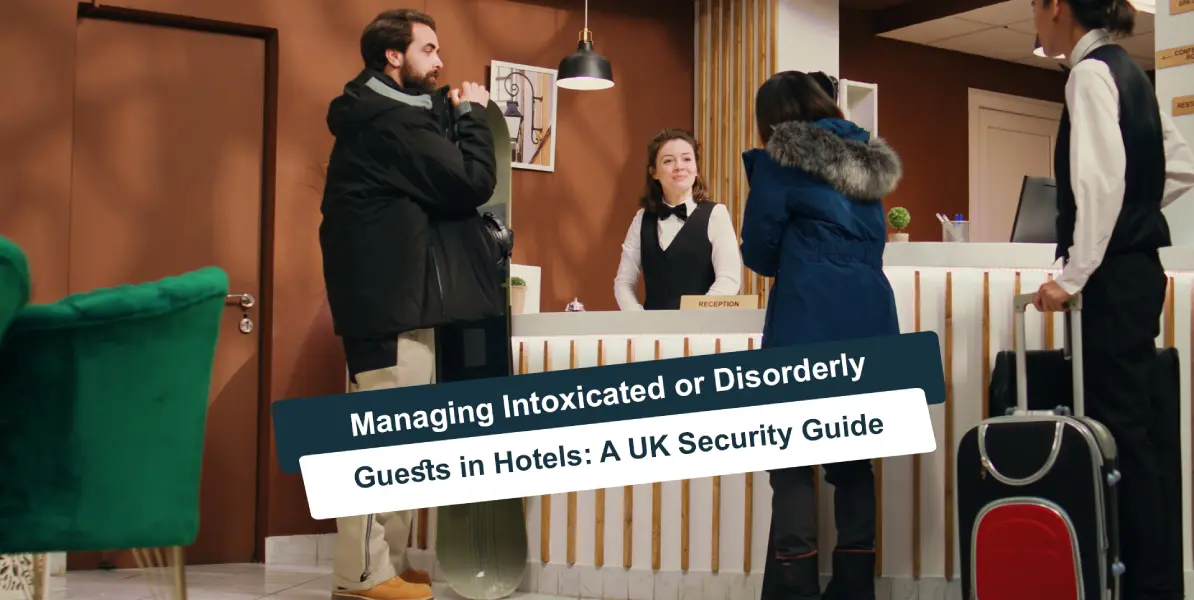
Intoxicated guests in hotels are a nightly reality for hotel security and front of house. The job is to keep the guest, other guests and staff safe without turning a drunk guest into an incident. This guide gives seven approaches that work, from the first conversation to when to refuse service or call for help.
Managing Intoxicated or Disorderly Guests in Hotels: A UK Security Guide
A practical guide for door supervisors, hotel security officers and duty managers who need to keep guests, staff and the business safe when a night goes wrong.
Intoxicated guests in hotels are one of the most common challenges in UK hospitality security. A wedding party that runs late, a conference group in the bar, or a single guest who has had far too much can turn a calm lobby into a tense situation within minutes. Handled well, the moment passes quietly. Handled badly, it can lead to injury, complaints, a licensing review or a viral video.
This guide explains how professional security teams manage intoxicated guests in hotels. You will learn how to read the warning signs, what the law says, and the seven proven steps trained officers use every day. Above all, you will see why the right SIA training makes the difference between a calm outcome and a costly one.
Why intoxicated guests in hotels need a different approach
A hotel is not a nightclub. Guests are not simply customers who can be shown the door; they are also residents who may have nowhere else to sleep that night. That changes everything. Security staff must balance the safety of other guests with a genuine duty of care towards the person causing the problem.
Hotels mix very different people in one building. Families, business travellers and late-night drinkers share the same lifts and corridors. This means a disturbance at 1am on the fourth floor affects everyone. That is why experienced hotel security teams treat intoxicated guests in hotels with early intervention, calm communication and clear procedures.
Spotting intoxicated guests in hotels early
The best incidents are the ones that never happen. Spotting intoxicated guests in hotels early gives your team time to act calmly. Trained officers watch behaviour, not just alcohol. Typical early signs include loud or repetitive speech, unsteady walking, glazed eyes, aggressive body language and over-familiarity with staff. Watch for guests being bought drinks by strangers or separated from their group, as this can signal vulnerability rather than nuisance.
Merry
Relaxed, chatty, still in control
Intoxicated
Slurred speech, unsteady, poor judgement
Disorderly
Shouting, abuse, threats or damage
Medical
Vomiting, collapse, unresponsive
What UK law says about drunk and disorderly guests
The law gives clear rules for dealing with intoxicated guests in hotels. Most hotel bars and restaurants operate under a premises licence. Therefore, the Licensing Act 2003 applies. Under section 141, it is an offence to knowingly sell alcohol to a person who is drunk. Furthermore, section 143 makes it an offence for a drunk or disorderly person to refuse to leave licensed premises when asked by an authorised person.
Equally important, anyone carrying out door supervision on licensed premises, including a hotel bar, must hold an SIA licence. If your role involves refusing entry, removing guests or managing the bar door, the SIA Door Supervisor licence is the qualification employers expect.
| Situation | What the law allows |
|---|---|
| Guest is drunk and asks for another drink | Staff must refuse service. Serving them is an offence under section 141. |
| Guest is disorderly in the bar and refuses to leave | An authorised person can ask them to leave. Refusing is an offence under section 143. |
| Guest becomes violent or threatens staff | Reasonable force may be used to protect people. Call the police on 999. |
| Guest is too drunk to look after themselves | The priority becomes welfare. Monitor them and call for medical help if needed. |
7 proven ways to manage intoxicated guests in hotels
The following approach moves from prevention to emergency. Each step reflects the skills covered in professional SIA training, so officers can respond with confidence rather than guesswork.
1
Work with the bar team early. Agree a simple signal so bartenders can alert security before a guest reaches their limit. Refusing a final drink calmly is far easier than removing an angry guest later.
2
Approach calmly and privately. Speak quietly, introduce yourself and move the conversation away from an audience. People lose face in front of friends, and that is when arguments start.
3
Use proven conflict management techniques. Keep an open stance, use their name and offer choices rather than orders. Our guide on responding to verbal abuse with confidence explains how to stay professional under pressure.
4
Offer a dignified way out. For residents, the best outcome is often an escort back to their room with water. For non-residents, arrange a taxi. A guest who leaves with dignity rarely comes back looking for trouble.
5
Remove only when necessary, and lawfully. If behaviour threatens others, the guest may need to leave the bar or the premises. Any physical intervention must be reasonable, proportionate and a last resort. Never restrain anyone face down; read our guide on positional asphyxia in security to understand why.
6
Put welfare first when drink turns dangerous. Intoxicated guests in hotels can quickly become medical cases. If someone is vomiting, confused or unresponsive, stay with them and act fast.
7
Record everything and review. Write a clear incident report, note CCTV camera references and inform the duty manager. Good records protect your officers, support any licensing review and help prevent repeat incidents.
The aim is never to win the argument. The aim is for everyone, including the guest, to wake up safe the next morning.
When intoxication becomes a medical emergency
The NHS warns that alcohol poisoning can be fatal. Call 999 straight away if a guest shows any of these signs:
- They cannot be woken, or slip in and out of consciousness.
- Their breathing is slow, irregular or noisy.
- They have a seizure, or their skin turns pale or blue.
- They are vomiting while drowsy, which risks choking.
Never leave them alone to “sleep it off”. Instead, place them in the recovery position and stay until help arrives. Our Emergency First Aid course teaches exactly these skills in one day.
Protecting staff from intoxicated guests in hotels
Reception, housekeeping and bar staff often face intoxicated guests in hotels first, usually without any security training. Consequently, clear escalation routes matter. Staff should know who to call, where the panic alarms are and never to tackle a disorderly guest alone. Similarly, lone night porters should have a way to request immediate support.
Operators that train their teams to manage intoxicated guests in hotels see fewer complaints, fewer injuries and stronger relationships with their licensing authority. A professional response protects online reviews, which are now just as valuable as any licence.
The right training for managing intoxicated guests in hotels
Every technique in this guide for managing intoxicated guests in hotels is part of formal SIA training. The SIA Door Supervisor course with First Aid covers licensing law, conflict management, physical intervention and emergency first aid in six days. This means it is the most complete qualification for hotel bar and hospitality security roles. Our article on why the Door Supervisor course opens the most security jobs explains the career benefits in more detail.
If you work mainly in lobbies, car parks or reception areas, the SIA Security Guard course is a strong alternative. Officers who monitor hotel cameras can also take the SIA CCTV Operator course. Already licensed? Keep your skills current with our SIA Refresher Training with First Aid.
New to the industry? Start with our step-by-step guide on **how to get an SIA licence in London, ** then prepare for your first role with these common SIA interview questions.
Ready to handle intoxicated guests in hotels with confidence?
Hospitality employers across London need licensed officers who stay calm, act lawfully and put welfare first. Train with London SIA Course, with courses starting every week at our London venues and First Aid included.
Book your Door Supervisor course
Questions? Call 020 8050 4108 or email security@bookcourse.co.uk.